


Sustainability
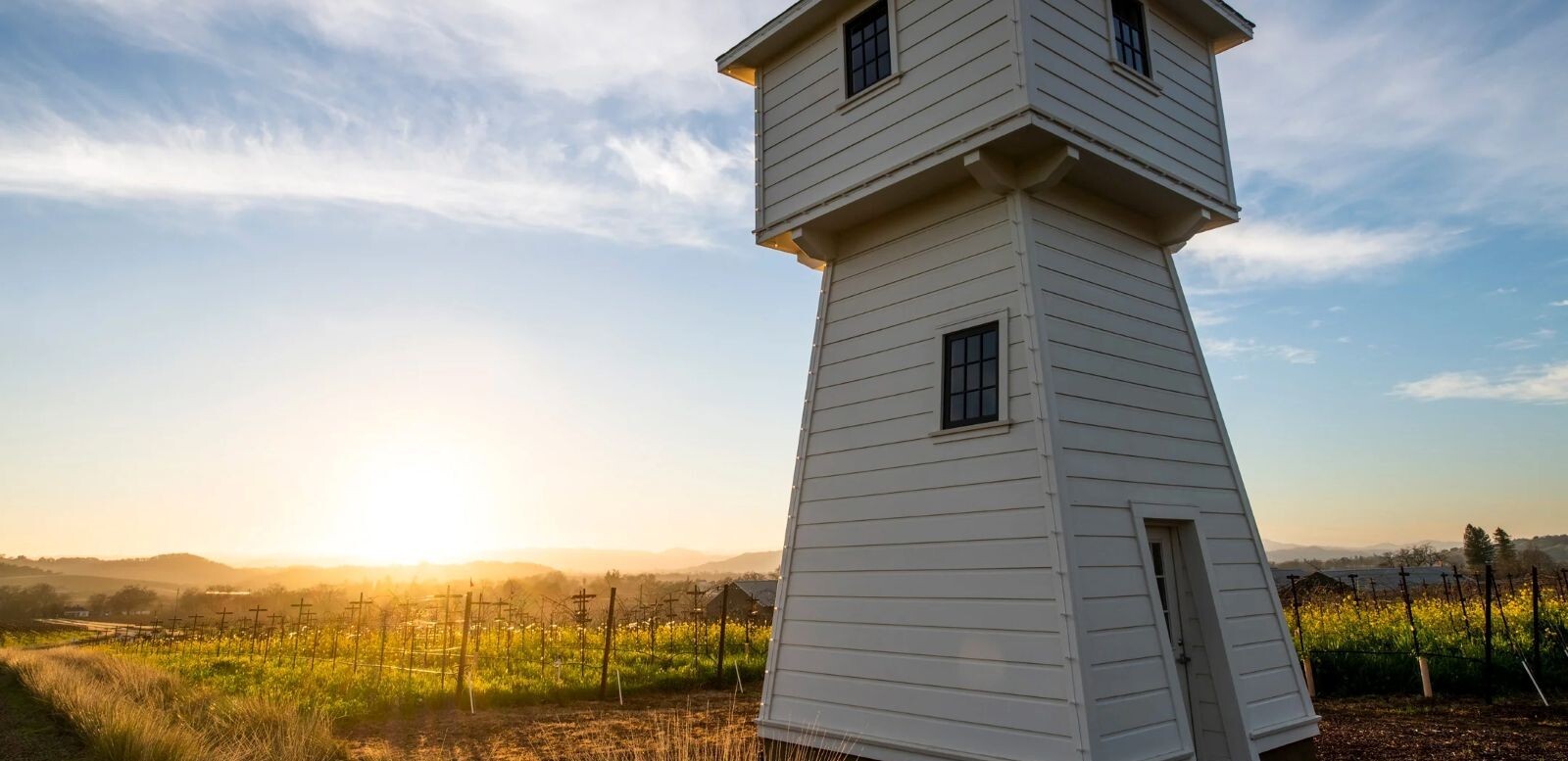
As a family-owned winery, Silver Oak looks to the future with generations to come in mind. We want to create quality wines while caring for the natural resources that make them possible. This approach connects our vineyards, wineries, tasting rooms and our own cooperage in Missouri.
For us, sustainability means making considered decisions in our everyday work. From more precise irrigation and renewable energy to our choice of building materials, we seek ways to use resources more responsibly while improving the conditions in which we make our wines.
LEED® Platinum-certified wineries
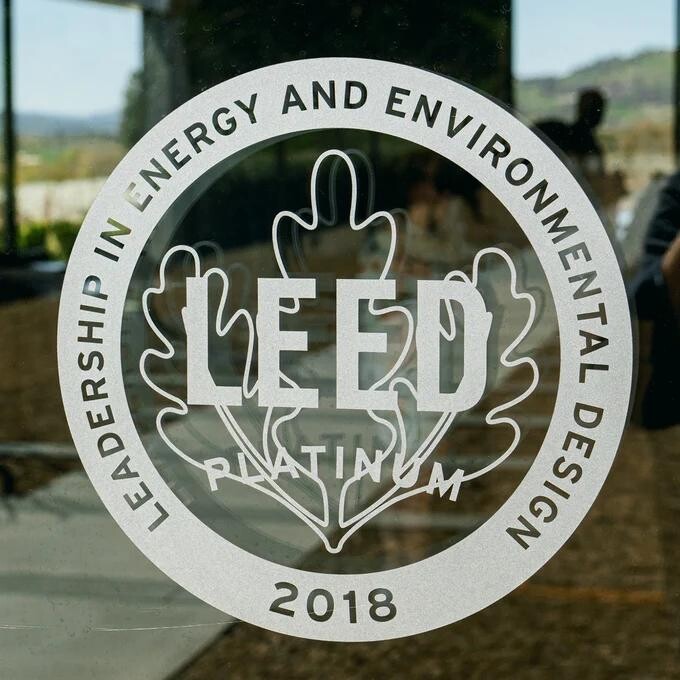
Both our Napa Valley and Alexander Valley wineries have earned LEED® Platinum, the highest level of certification awarded by the U.S. Green Building Council. The assessment covers areas including water and energy management, materials and indoor environmental quality.
Our Oakville facility received this certification in 2016 in the Existing Buildings, Operations and Maintenance category. It is also certified as a Napa Green Winery. Our Alexander Valley winery followed in 2018 with certification in the Building Design and Construction category.
Precision viticulture
Every vineyard has different conditions and needs. To understand them better, we use precision viticulture: technologies that help us monitor vine health and tailor our farming to individual areas of each vineyard.
Handheld devices measure photosynthesis and water loss from leaves, while aerial infrared images reveal differences in vine growth and vigor. These data help us assess water needs more accurately and make irrigation decisions based on the actual condition of the plants. Our aim is balanced vine growth and thoughtful water use.
Water conservation
Water conservation continues in our wineries. In Alexander Valley, we use a membrane bioreactor that treats all wastewater from the cellar through biological processes and filtration. This allows us to reuse treated water and reduce our need for potable water.
We use steam to sanitize barrels and prepare new barrels before filling them with wine. Compared with filling barrels with water, this process requires substantially less water.
Solar energy
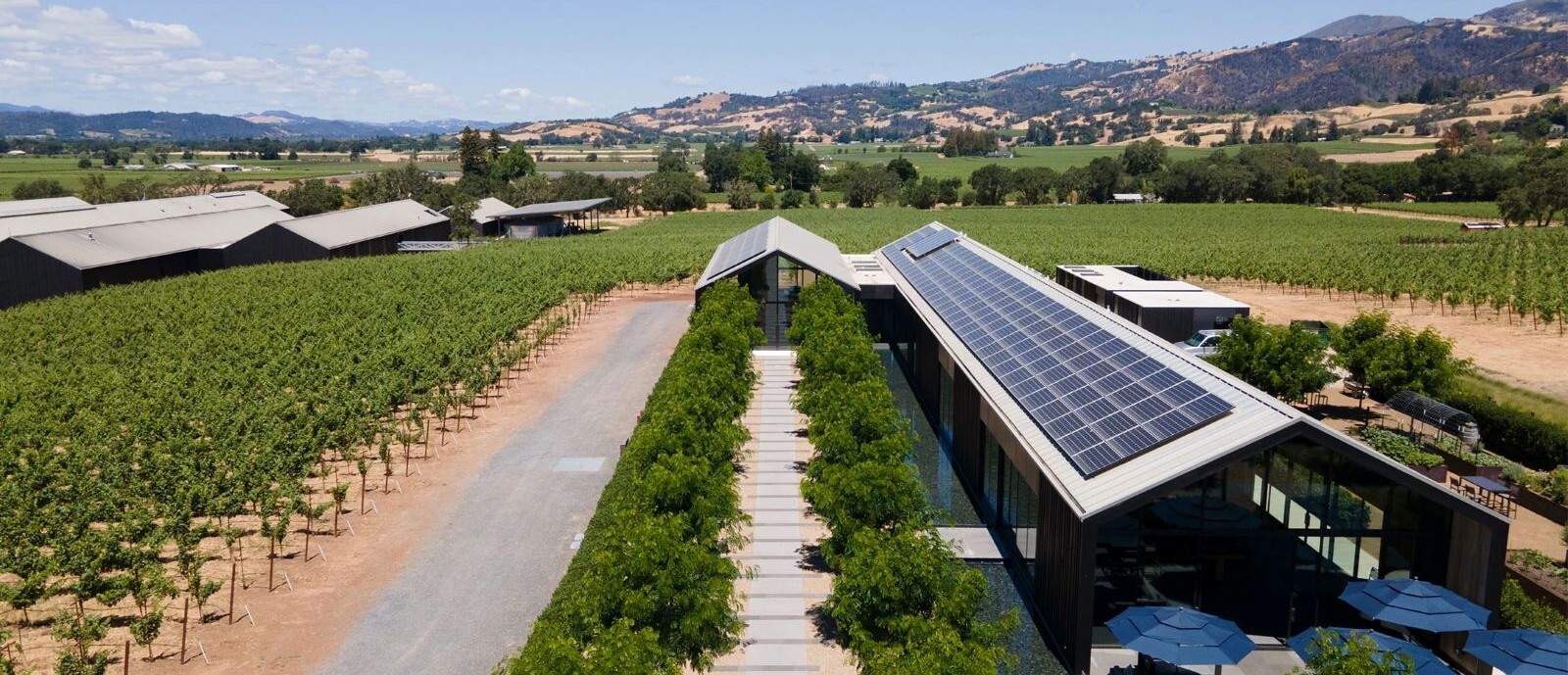
Our wineries use their own solar panels, with 1,464 installed in Oakville and 2,595 in Alexander Valley. We supplement our own electricity generation by purchasing energy from renewable sources.
We also reduce consumption through building design and the way we operate our facilities. Thick insulation and night-air cooling limit the need for mechanical cooling. Our Oakville cellar uses natural daylight, while LED lighting and motion sensors help save electricity at both wineries. Both properties also have electric vehicle charging stations.
Building materials and indoor environments
When building our wineries, we made extensive use of salvaged and reclaimed materials, including stone, oak and redwood.
For our Alexander Valley winery, we reviewed more than 3,000 building materials and equipment options. We excluded materials containing chemicals on the Living Building Challenge’s Red List. We also assessed volatile organic compound emissions from paints, flooring, insulation and furniture, and tested indoor air quality after construction was complete.
In April 2020, our Alexander Valley winery received Living Building certification from the International Living Future Institute. This certification assesses a building’s actual performance against the demanding requirements of the Living Building Challenge.
Reducing emissions
In 2019, we joined International Wineries for Climate Action, a group of wineries working together to reduce greenhouse gas emissions through a science-based approach. Our goal is to achieve net zero emissions by 2050, with interim targets for 2030.
Alongside renewable energy, we are introducing electric equipment for grounds maintenance and making changes to packaging and related processes. We apply labels in-house and have returned to sourcing bottles from local suppliers for most of our wines.
Each of these measures is part of our long-term stewardship of Silver Oak. We want the next generation to be able to build on our work, with healthy vineyards and facilities that use natural resources responsibly.


